
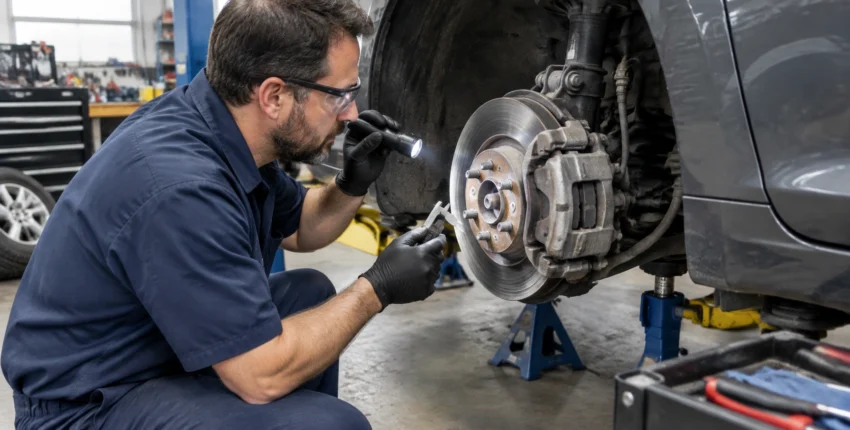
Brake service can be confusing. One driver hears a squeak and is told the entire braking system needs attention. Another feels a vibration for months and keeps putting off a repair. Neither approach is ideal.
The honest answer is that brake work should be based on symptoms, measurements, and the condition of individual components, not on a one-size-fits-all package.
For drivers looking for brake repair in Deerfield Beach, it helps to understand what your braking system does, which problems are urgent, and which recommendations should be supported by clear evidence. That knowledge makes it easier to approve necessary work with confidence and decline repairs that do not apply to your vehicle.
Why Deerfield Beach driving can be hard on brakes
Daily driving around Deerfield Beach, Ft. Lauderdale, Pompano Beach, and nearby communities often involves frequent stops. Traffic on I-95 and US-1 can mean repeated braking, acceleration, and sudden changes in speed. That stop-and-go cycle creates heat and gradually wears friction components.
South Florida weather adds another layer. Heavy rain can reduce tire grip and increase stopping distance, especially when roads are slick. A light film of surface rust on rotors after a wet night may cause brief noise during the first few stops, but it should clear quickly.
Heat, humidity, and salt air near the coast can also encourage corrosion on rotors, calipers, brackets, and other exposed metal parts. Coastal exposure does not automatically mean you need new brakes, but it does make regular inspection more valuable. Corrosion that causes a caliper to stick or brake hardware to bind is a real problem; harmless surface discoloration is not the same thing.
What each brake component actually does
Knowing the basic parts makes brake recommendations easier to understand.
Brake pads and shoes
Most modern vehicles use disc brakes with pads at the front and often at the rear. Some vehicles still use drum brakes with brake shoes. Pads and shoes create friction against a rotor or drum, converting the vehicle’s motion into heat.
They are wear items. Eventually, they become too thin to work safely and need replacement. However, they do not wear at exactly the same rate on every vehicle. Driving habits, traffic, vehicle weight, brake design, and caliper condition all matter.
Rotors and drums
Rotors are the flat metal discs squeezed by brake pads. Drums are enclosed components used with brake shoes.
A rotor may need replacement when it is below the manufacturer’s minimum thickness, badly grooved, cracked, heat-damaged, heavily pitted, or uneven enough to cause pulsation. A little surface rust or normal discoloration does not automatically justify replacing it.
Calipers and wheel cylinders
A caliper presses the pads against the rotor. In a drum system, wheel cylinders push the shoes outward against the drum.
These parts should not be replaced simply because pads are being replaced. They may need attention if they leak, stick, fail to release, or cause uneven braking and abnormal heat at one wheel.
Brake fluid, lines, and hoses
Brake fluid transfers pressure from the pedal to the wheel brakes. Lines and flexible hoses carry that fluid throughout the vehicle.
Leaks, damaged hoses, contaminated fluid, or air in the system can create a low or spongy pedal. Brake fluid also absorbs moisture over time, so fluid service should be based on the vehicle manufacturer’s maintenance schedule, testing, or a specific condition, not an unexplained add-on.
Anti-lock braking system
The ABS helps prevent wheel lockup during hard braking. If the ABS warning light is illuminated, the vehicle may still stop, but the anti-lock function may not be available when you need it. That warning should be diagnosed rather than ignored.
Brake work you may actually need
A proper inspection should identify the condition of each major component and explain why a repair is recommended.
Brake pads or shoes
Replacement is appropriate when friction material is near or below the manufacturer’s service limit, worn unevenly, contaminated, cracked, or damaged. A reputable shop should be able to show you the remaining thickness or provide the measurement.
You may also hear a high-pitched squeal from a built-in wear indicator when pads are nearing the end of their service life. That is a signal to schedule an inspection, not necessarily proof that every brake component needs replacement.
Rotors or drums
Pads and rotors work together, but replacing both does not mean every rotor is automatically bad. Rotors should be measured and inspected for thickness, grooves, cracks, excessive rust, heat damage, and runout.
If a rotor is within specification and its surface can safely support proper braking, replacement may not be necessary. If it is too thin or damaged, installing new pads without addressing it may lead to noise, vibration, or poor contact.
Caliper, hardware, or hose repair
A sticking caliper can create pulling, uneven pad wear, excess brake dust, or a hot wheel. Corroded slide pins or damaged hardware can prevent pads from moving correctly. A restricted hose can also cause uneven braking.
These repairs may be necessary, but the recommendation should connect to a specific finding. Ask which wheel is affected and what the technician observed.
Brake fluid service
A fluid exchange can be worthwhile when the fluid is contaminated, moisture-laden, or due according to the maintenance schedule. It is different from simply topping off the reservoir.
If the fluid level is low, the cause should be investigated. Brake fluid does not normally disappear without a reason, and a low level can point to worn components or a leak.

What you may not need
Trustworthy brake service also means knowing when not to sell a repair.
You may not need new rotors solely because they have light orange surface rust after rain. You may not need calipers just because the pads are worn. You may not need a complete brake-system replacement when the issue is limited to one axle or one leaking hose.
You also do not need to approve work based only on a vague statement such as “your brakes are bad.” Ask for measurements, photos, or a clear explanation of the failed part. Brake recommendations should distinguish between:
- Safety-critical repairs needed now
- Maintenance that can be planned
- Normal wear that does not require replacement yet
- Optional work with a specific benefit
That distinction is especially important when a vehicle still feels normal. Some brake problems are easy to detect from the driver’s seat, while others are found during a professional inspection before they become obvious.
Warning signs you should not ignore
Schedule a prompt inspection if you notice:
- Grinding, scraping, or a rumbling sound during braking
- A soft, sinking, or unusually low brake pedal
- Longer stopping distances
- Pulling to one side when braking
- Steering-wheel or pedal vibration during stops
- A burning odor near a wheel
- One wheel producing much more brake dust than the others
- A brake, ABS, or red warning light on the dashboard
- Fluid spots or an oily leak near a wheel
- Repeated squealing that does not go away after the brakes dry
A brief squeak after rain can be normal. Persistent grinding, a soft pedal, strong pulling, or a brake warning light is not something to monitor indefinitely. If the pedal suddenly drops, braking feels seriously impaired, or a wheel is smoking or extremely hot, stop driving when it is safe and arrange professional assistance.
Questions to ask before approving brake work
You do not need to challenge every recommendation. You simply need enough information to make an informed decision.
Ask:
- Which component has failed or reached its service limit?
- What are the pad, shoe, rotor, or drum measurements?
- Is the repair needed immediately, or can it be planned?
- Are both sides of the axle being addressed, and why?
- What caused the uneven wear, noise, or vibration?
- Can you show me the worn or damaged part?
- What happens if I wait, and how soon should I return?
- What parts and labor are included in the estimate?
- What warranty applies to the repair?
A clear shop should be comfortable answering these questions without pressure. If the explanation changes from “inspection” to a large package of unrelated services, pause and ask for the reason behind each item.
A practical brake inspection for local drivers
A car inspection in Deerfield Beach should look beyond the visible pad edge. A complete brake check may include pad or shoe thickness, rotor or drum condition, caliper operation, hardware, hoses, brake lines, fluid level and condition, warning lights, and pedal performance.
At Life Line Automotive, we provide a free bumper-to-bumper inspection on every visit. That does not mean every inspection results in a long repair list. It gives you a broader view of what is safe, what is wearing, and what may deserve attention later.
Our ASE-certified technicians have more than 25 years of experience working on cars, trucks, SUVs, and light fleets. As a family-run shop offering auto repair in Deerfield Beach, we believe recommendations should be explained in plain language and tied to actual vehicle needs.
Repairs are also backed by a two-year/24,000-mile nationwide warranty with roadside assistance. You can learn more about that coverage on our warranty information page.
The bottom line on brake repair
Your brakes deserve attention, but they do not deserve guesswork. In Deerfield Beach’s heat, humidity, rain, traffic, and coastal air, regular inspections can catch genuine wear before it becomes a safety issue. At the same time, a good inspection should protect you from replacing parts that are still within specification.
If you hear, feel, or see something unusual, or simply want an honest assessment, schedule brake service with Life Line Automotive. We’ll inspect the system, explain what we find, and help you decide what your vehicle actually needs.