
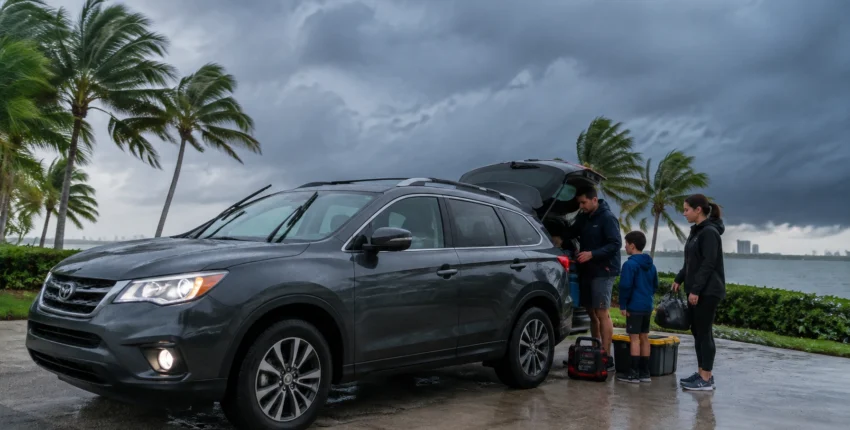
September is an important time for storm preparation in Deerfield Beach. Even when a hurricane is not headed directly toward South Florida, heavy rain, flooded roads, power outages, fallen trees, and fuel shortages can create dangerous conditions quickly.
Your vehicle should be part of your storm plan. A reliable car can help you get to work, pick up your family, reach a shelter, or evacuate safely if local officials recommend leaving. The key is handling small maintenance concerns before severe weather arrives: not waiting until every repair shop and gas station is busy.
Here are the most important areas to check, from brakes and battery health to tires, visibility, fluids, and floodwater safety.
Start with a complete pre-storm inspection
A storm-season check is more than looking under the hood. Your vehicle’s safety systems need to work together, especially when roads are wet and visibility is poor.
Before the next storm threat, schedule a professional car inspection in Deerfield Beach and ask the technician to review:
- Brakes and brake fluid
- Battery and charging system
- Tires and spare tire
- Windshield wipers and washer fluid
- Headlights, brake lights, turn signals, and hazard lights
- Engine oil, coolant, and other essential fluids
- Belts, hoses, and visible leaks
- Air conditioning and cabin airflow
At Life Line Automotive, every visit includes a free bumper-to-bumper inspection. That gives our technicians an opportunity to identify safety concerns that may not be obvious from the driver’s seat and explain what needs attention now, what can wait, and what is simply in good condition.
That honest approach matters before a storm. You need useful information: not a long list of unnecessary repairs.
Give your brakes extra attention
Wet pavement, standing water, sudden traffic stops, and debris in the roadway all increase the demands on your braking system. If your brakes are already worn, storm conditions can make the problem more noticeable at exactly the wrong time.
During a brake inspection, a qualified technician should check the condition and operation of the:
- Brake pads or shoes
- Rotors or drums
- Calipers and wheel cylinders
- Brake lines and hoses
- Master cylinder
- Brake fluid
- Parking brake
Pay attention to warning signs such as squealing, grinding, vibration through the steering wheel, a soft pedal, pulling to one side, or a brake warning light. These symptoms do not always mean the same repair is needed, but they should not be ignored.
For drivers searching for brake repair in Deerfield Beach, the right next step is a proper inspection rather than replacing parts based on a guess. Sometimes the issue is worn brake material. In other cases, a sticking caliper, contaminated fluid, uneven wear, or a damaged rotor is responsible.
If you have recently driven through heavy rain or shallow water, test your brakes gently at low speed in a safe area. Brakes may feel temporarily less responsive while wet. If the pedal remains soft, the vehicle pulls, or braking performance does not return to normal, have the system checked before continuing to drive.
You can also review why regular brake inspections are important for safe driving to learn more about the warning signs and components involved.

Test the battery before you need it
Florida heat is hard on car batteries. High temperatures can accelerate internal battery wear, even if the vehicle seems to start normally every morning. A weak battery may not give much warning before it fails.
A proper battery and charging-system check should include more than a quick voltage reading. Ask for:
- A battery load test
- Terminal and cable inspection
- Corrosion removal if needed
- Battery hold-down inspection
- Alternator output testing
- Ground connection inspection
The battery should be secure, the terminals should be clean and tight, and the charging system should be replenishing the battery correctly while the engine runs.
If your battery is several years old, close to the end of its warranty, or showing signs of slow cranking, replacement before storm season may be a sensible choice. It is much easier to handle this repair during a normal appointment than in a parking lot after a power outage or during an evacuation.
Keep jumper cables or a portable jump starter in your emergency kit, but remember that these items do not fix an underlying charging problem. If your car needs repeated jump-starts, have the battery, alternator, and electrical system diagnosed by a mechanic in Deerfield Beach, FL.
Check tires, including the spare
Good tires are essential when rain covers lane markings and creates a risk of hydroplaning. Check the pressure when the tires are cold and use the vehicle manufacturer’s recommended pressure listed on the driver’s door-jamb label.
Do not use the maximum pressure molded into the tire sidewall as your normal target. That number is not necessarily the correct setting for your vehicle.
Inspect each tire for:
- Low or uneven tread
- Cracks, bulges, or cuts in the sidewall
- Nails or other embedded objects
- Uneven wear that may indicate an alignment or suspension issue
- Tire age and signs of heat-related deterioration
Do not forget the spare tire. Check its air pressure and confirm that the jack, lug wrench, and wheel-lock key are present. A spare that has been sitting unused for years may not be ready when you need it.
Proper tire maintenance can also reduce the risk of losing control on wet roads. If you notice uneven wear or steering that feels loose, schedule an inspection rather than simply replacing one tire. Life Line Automotive also provides guidance on why tire rotations and alignments are critical to safety.
Make sure you can see and be seen
Heavy rain can reduce visibility within seconds. Worn wiper blades may smear water across the windshield instead of clearing it, while a burned-out brake light or headlight makes it harder for other drivers to see you.
Before storm season, test:
- Windshield wipers and washers
- Headlights and high beams
- Brake lights
- Turn signals
- Hazard lights
- Reverse lights
- License-plate illumination
Replace cracked or streaking wiper blades and refill the washer-fluid reservoir. Avoid substituting plain water if possible; washer fluid is designed to clean the windshield more effectively.
Your air conditioning system also plays a role in visibility. A properly working defroster helps clear interior windshield fog during humid weather and heavy rain. If the vents blow weakly, the air stays warm, or the cabin develops a musty smell, schedule car AC repair in Deerfield Beach before the next storm. A technician may need to inspect the cabin air filter, blower motor, evaporator, or A/C drain.
Check fluids and keep the tank at least half full
Storm preparation is not the time to run every fluid level down to the minimum. Check the engine oil, coolant, brake fluid, transmission fluid, power steering fluid if equipped, and windshield washer fluid.
Do not open the coolant reservoir while the engine is hot. If you see a leak, a low-fluid warning, or an unexplained drop in level, have the cause identified instead of repeatedly topping it off.
Keep your gas tank at least half full during hurricane season. If a storm is approaching, filling the tank early is safer than waiting until evacuation traffic and fuel lines are already forming. Drivers of electric vehicles should follow the manufacturer’s charging guidance and keep enough charge available for local travel or evacuation.
It is also smart to keep copies or photos of your registration, insurance information, and emergency contacts in a secure location.
What to do if floodwater reaches your vehicle
The safest rule is simple: never drive through floodwater when you can avoid it. Water can hide potholes, damaged pavement, debris, and open drains. Moving water can push a vehicle off course, and water entering the air intake can cause severe engine damage.
If your parked vehicle has been exposed to floodwater:
- Do not start the engine. Attempting to crank a water-damaged engine can make the damage much worse.
- Do not drive the car, even if it appears to run normally.
- Take photos of the exterior, interior, and visible water line for your insurance records.
- Arrange a tow to a qualified repair facility.
- Have the engine, air intake, transmission, brakes, electrical systems, fluids, and control modules inspected.
Floodwater can contaminate brake fluid, damage wheel bearings, corrode connectors, and create electrical problems that appear days or weeks later. If water reached the cabin floor or higher, a thorough inspection is especially important.
Life Line Automotive has towing availability for customers who cannot safely bring a vehicle to the shop. Call before attempting to move a flooded car so the safest recovery option can be arranged.
Prepare your vehicle before the next storm threat
A few preventive steps can make storm season less stressful:
- Keep the fuel tank at least half full.
- Store a flashlight, phone charger, water, first-aid supplies, and basic tools in the vehicle.
- Add jumper cables or a jump starter and a tire inflator.
- Park on higher ground and away from trees, power lines, and loose outdoor objects.
- Keep your insurance and registration information accessible.
- Follow evacuation instructions and avoid flooded roads.
If your vehicle needs service, Life Line Automotive’s ASE-certified technicians use advanced diagnostic equipment to inspect and repair all makes and models. Repairs are supported by a two-year/24,000-mile nationwide warranty with roadside assistance, subject to the warranty’s terms.
Storm preparation is not about predicting exactly what will happen. It is about removing avoidable risks before heavy rain, flooding, and evacuation traffic make vehicle problems harder to manage. Schedule your inspection with Life Line Automotive in Deerfield Beach, or book an appointment online. We will inspect your vehicle honestly and help you understand what it needs to stay dependable through South Florida’s storm season.